The Only Way to Win in a Crowded Market
100+ Pilates studios in Silicon Valley.
How do you stand out?
The strategic process:
How customer insight (Silicon Valley tech workers as underserved audience) led to the positioning "Pilates for people who don’t know Pilates"
Client/Company: OFFLINE PILATES
Date: March 2026
The Problem: Palo Alto has fifteen-plus Pilates studios. Every one plays the same game: "wellness for everyone," beige walls, candles, gentle language about inner balance. When everyone sounds identical, price becomes the only differentiator. That's a race to the bottom — not where you want to be with Palo Alto rent.
Makini had spent years at Google, Nike, and Disney watching world-class brands up close. She wanted strategic clarity before opening the doors. So she reached out to a one-person consultancy in Copenhagen, nine time zones away.
The Insight: Most people would've built a better version of the same thing. Better design, sharper copy, nicer interiors. We went the other direction entirely.
The biggest underserved audience was hiding in plain sight: Silicon Valley tech workers. People who sit at screens twelve hours a day. They've optimized sleep, nutrition, morning routines. Everything except their actual bodies. They need Pilates more than anyone — but when every studio markets toward soft-focus lifestyle imagery, they can't see themselves in it.
That's how we arrived at "Pilates for people who hate Pilates." Not a tagline — a strategic foundation. Offline Pilates exists for high-performers who never considered Pilates because nobody spoke their language.
The Strategy: We used Playing to Win to force real choices — not vague brand values, but decisions with teeth:
Performance over lifestyle. Results busy executives can measure. Pilates as physical infrastructure, not a wellness escape.
Exclusivity over accessibility. Better to be perfect for a hundred people than okay for a thousand.
Technical mastery over general wellness. Deep expertise commands premium pricing. Wellness platitudes don't.
We built four named audience archetypes as decision-making filters. Every brand choice had to pass a simple test: would this person stop scrolling for this?
The brand personality: "the person at the party with the straight back and the knowing smile." Confident. Precise. Not trying too hard.
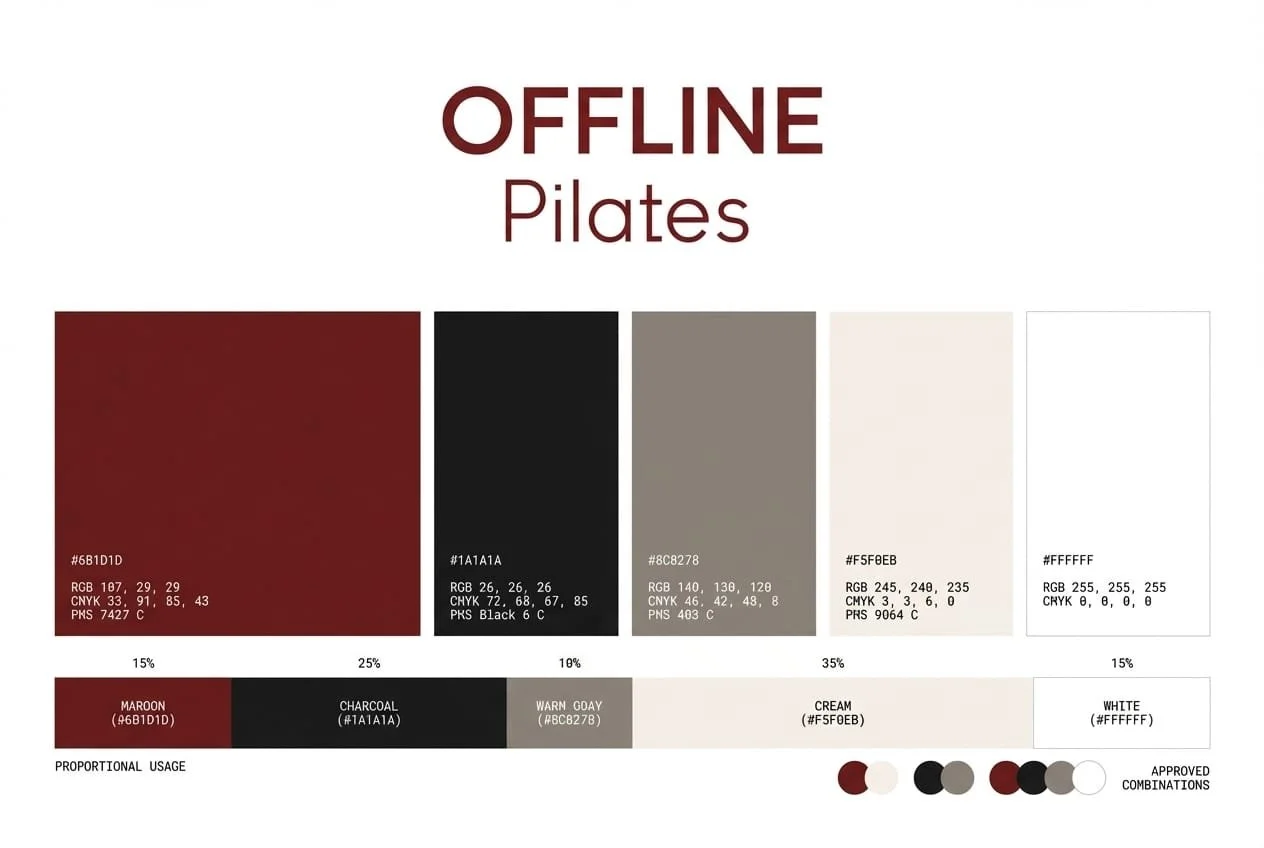
Delivered fully remote. Copenhagen to Palo Alto, four weeks, forty-one pages covering positioning, audience insights, brand personality, visual strategy, and go-to-market.
The Result: Pricing set 40% above market average — because every element reinforced one coherent strategic choice. The brand attracted clients before the studio officially launched.
Makini's response: "Taun took the messy, half-formed thing living in my imagination and gave it structure, shape, and a visual language that made other people feel what I'd been feeling."
The sprint converted to a retainer. That's the strongest signal a client can send.